Queue Management System in Karachi: 2026 Business Guide
Any busy branch in the city knows the scene: a crowded counter, a tangle of customers unsure who is next, and a manager fielding complaints instead of running the floor. A well-designed queue management system in Karachi replaces that chaos with a fair, trackable line, and in 2026 it has become a must-have for banks, hospitals, telecom franchises, and government offices across the metro. This guide breaks down how the technology works in a Pakistani context, what it costs, and how to roll it out without disrupting daily trade.
Karachi’s sheer footfall makes the case on its own. When thousands pass through a branch each week, even a small cut in average wait time compounds into hours of recovered staff productivity and far fewer walkaways.
Why Karachi Businesses Need a Queue Management System
Customer expectations in Pakistan have caught up with global standards. People who bank and shop on their phones will not tolerate a shapeless crowd at a physical counter. A structured queue restores order and, just as importantly, restores the sense that the business respects the customer’s time.
The operational upside is equally real. Managers finally get data: how long people wait, which service takes longest, and when the daily peak hits. Deploying a queue management system in karachi turns those questions into dashboards instead of guesses, and that visibility is what separates a smooth branch from a stressed one.
Signs your branch is overdue for an upgrade
- Customers regularly leave before being served during peak hours.
- Staff spend time refereeing “who was next” disputes.
- You cannot say, with data, when your busiest hour truly is.
- Complaints about waiting dominate your feedback forms.
- New branches copy old habits instead of a proven standard.
How the System Works in a Pakistani Branch
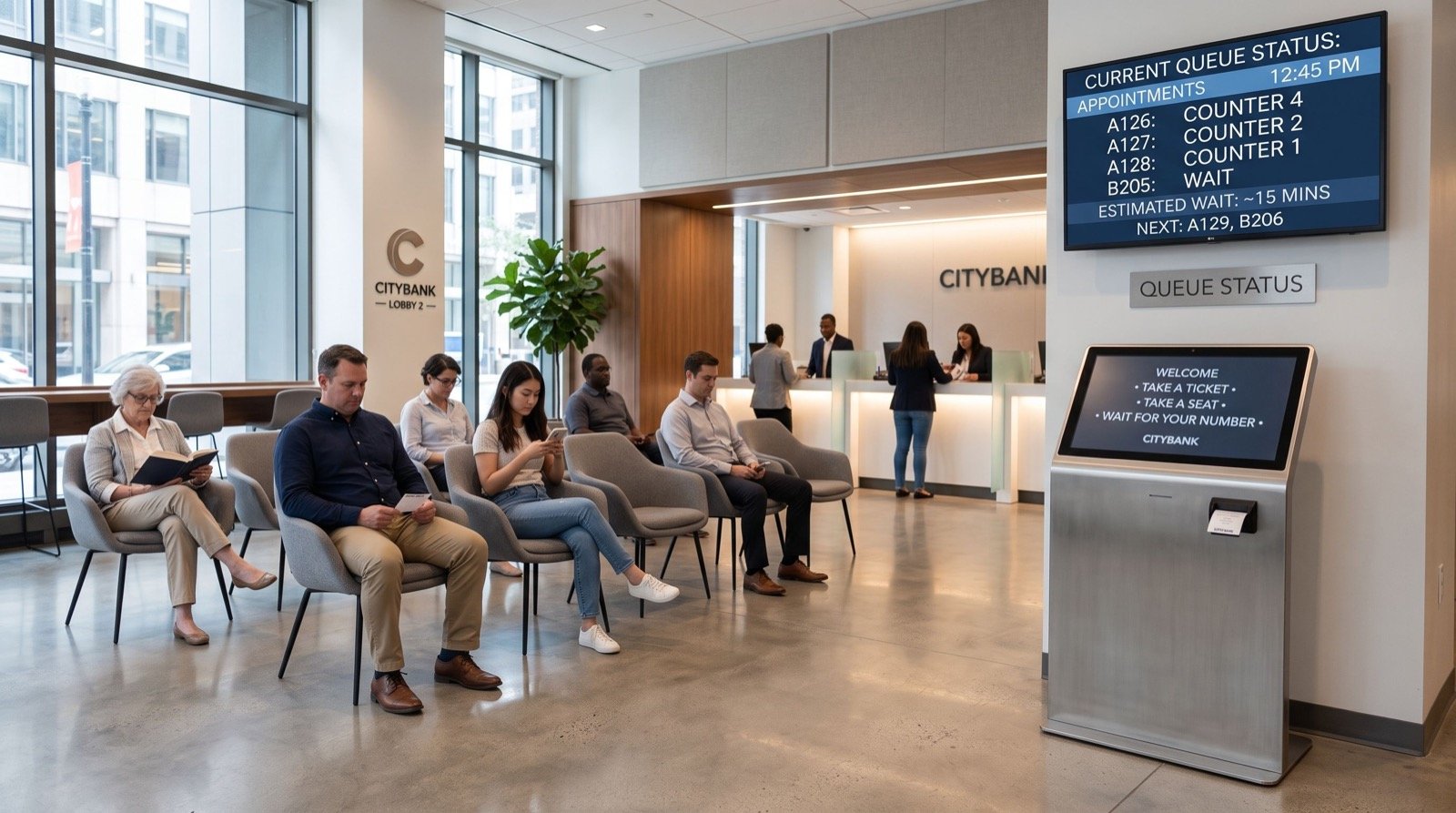
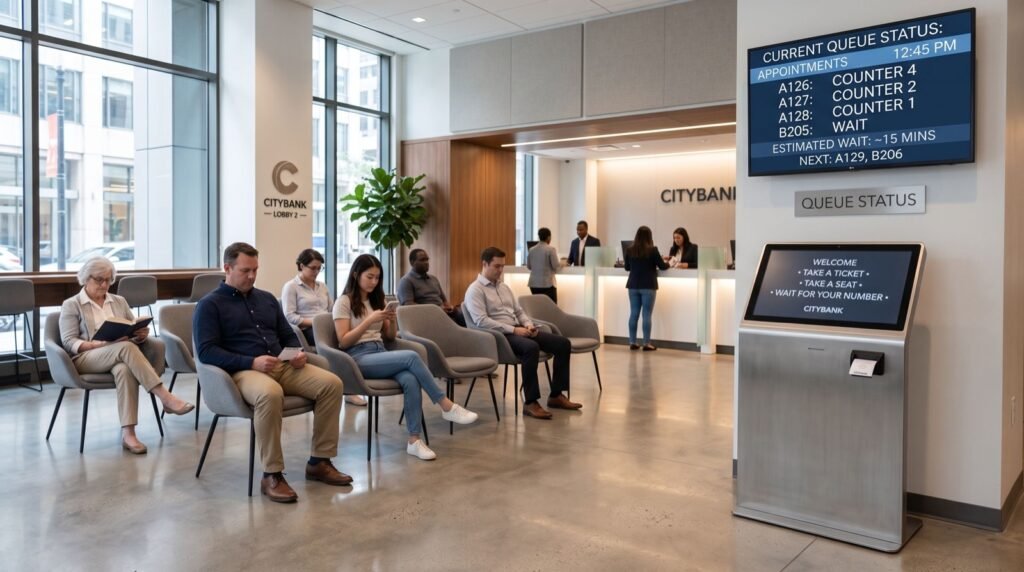
The flow is refreshingly simple for the customer. On arrival, a visitor selects a service at a kiosk or scans a QR code, receives a token, and watches a screen or their phone for their number. Staff call the next token from their counter app, and every step is timed in the background.
Behind the scenes, a central server balances load across counters, applies priority rules for elderly or disabled visitors, and stores the analytics. Bilingual Urdu and English displays keep the experience accessible to every customer who walks in, which matters enormously in a diverse city like Karachi.
Is a queue management system expensive to run in Pakistan?
Not as much as many owners fear. The recurring cost is modest once hardware is installed, and pricing scales with the number of counters and branches rather than a flat premium. For most mid-sized branches, the savings from fewer walkaways and better staff scheduling cover the running cost comfortably. The smarter question is not “can we afford it” but “what is the abandoned-customer problem costing us today.”
From Counter Queues to Drive-Thru Lanes
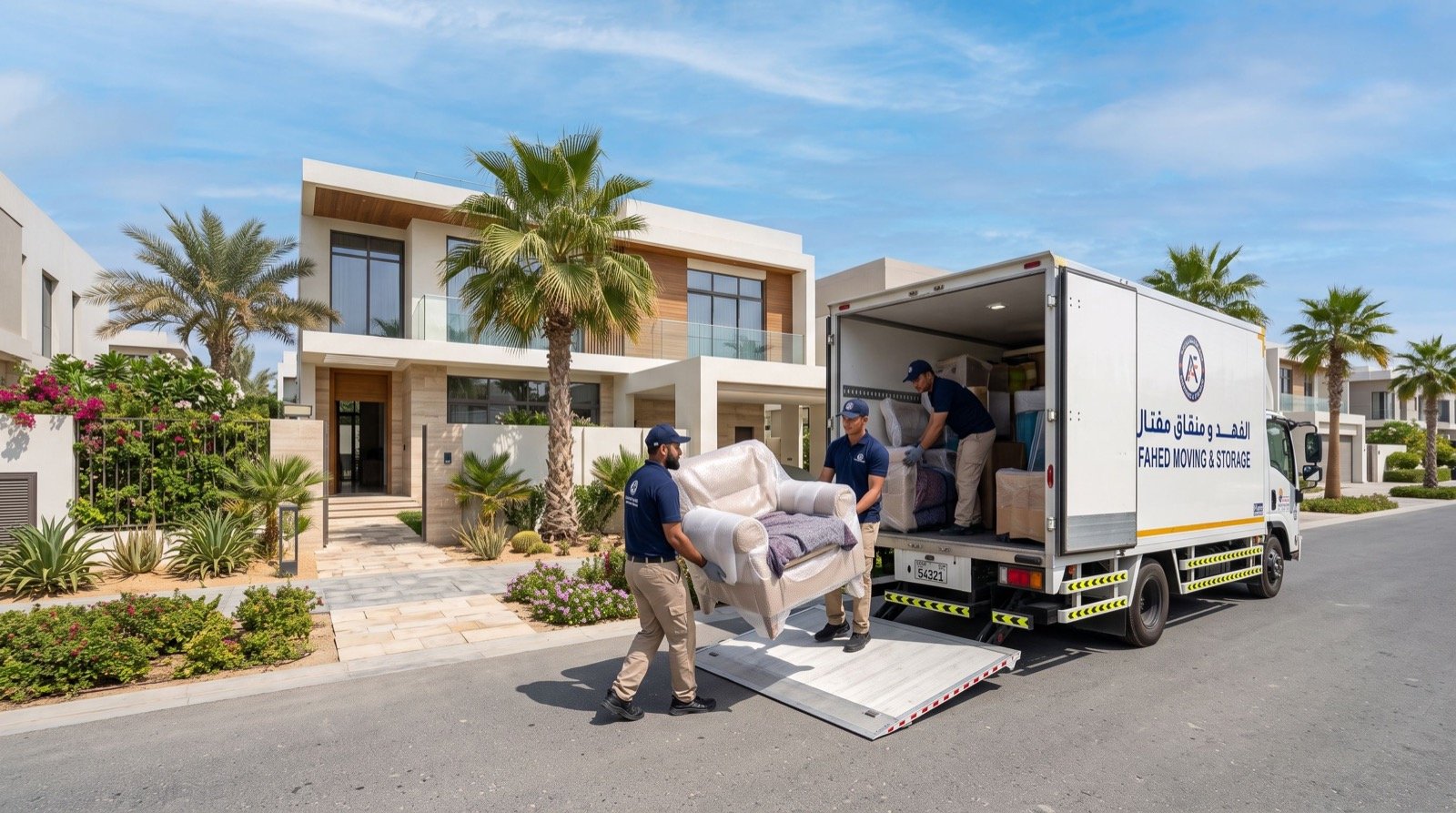
The same waiting-line logic now powers quick-service pickup. Pakistan’s fast-food and pharmacy chains are investing in lane technology to keep cars moving, and headset audio plus order-confirmation screens are becoming standard. A modern HME drive thru in pakistan setup measures each stage of the lane so operators can pinpoint exactly where cars stall.
Whether the customer is on foot at a counter or in a car at a window, the principle holds: measure every stage, find the bottleneck, and fix it. Choosing quality service providers for both indoor and drive-thru deployments keeps the technology consistent across your locations.
Indoor queue vs. drive-thru at a glance
| Aspect | Indoor Counter | Drive-Thru Lane |
|---|---|---|
| Entry point | Kiosk or QR token | Speaker + menu board |
| Key metric | Average wait time | Cars per hour |
| Customer update | Screen / SMS | Confirmation display |
| Typical peak issue | Counter overload | Lane stacking |
| Common fix | Dynamic routing | Timers, second lane |
Rolling It Out Without Disrupting Trade
A phased approach beats a big-bang switch every time. Follow a clear sequence so customers barely notice the transition.
- Audit one branch. Measure current wait times so you have a baseline to beat.
- Define services. List every reason customers visit and group them into queues.
- Pilot for two weeks. Run the system in your busiest branch and watch real behavior.
- Train staff early. A confident team makes the technology feel effortless to customers.
- Review the data. Adjust counter counts and signage based on the first fortnight.
- Scale citywide. Roll the proven standard out to remaining branches.
One field-tested tip: place the ticketing kiosk in the customer’s natural line of sight as they enter, not off to the side. In several deployments, simply moving the kiosk to the doorway lifted ticket adoption sharply and cut confusion at the counter.
Data, Reliability, and Local Support
When a system sends SMS alerts, it handles phone numbers, so responsible data practice is essential. Pakistan’s telecom sector is regulated by the Pakistan Telecommunication Authority, and any messaging feature should respect consent and opt-out norms. Equally important is reliability: choose a platform that keeps ticketing alive during a power or internet interruption, then syncs data once service returns. Local installation and fast maintenance matter more than a rock-bottom price, especially in a city where downtime during peak hours is costly.
Frequently Asked Questions
What is a queue management system in Karachi?
It is a mix of hardware and software that organizes branch visitors into a fair, tracked line. Customers take a physical or virtual token, follow their turn on a screen or phone, and get called to a counter, while managers see live wait-time and service data across the branch.
How long does installation take?
A single branch can often go live within a few days once hardware arrives, including kiosk setup, display mounting, and staff training. Multi-branch rollouts run in phases, typically starting with a two-week pilot before citywide deployment.
Can small businesses benefit too?
Yes. Even a single busy outlet gains from fewer walkaways, calmer staff, and clear peak-hour data. Entry-level packages suit clinics, small telecom franchises, and service centers, and they scale up as the business grows.
Does it support Urdu?
Quality platforms offer full bilingual Urdu and English displays, tickets, and voice announcements. This keeps the experience accessible to every customer and is a key requirement to confirm during your vendor evaluation.
Conclusion and Next Steps
For any high-footfall branch in the city, a queue management system in Karachi is now the difference between a stressed floor and a smooth, measurable operation. Ticket the wait, measure every stage, and let the data guide staffing and layout, whether at an indoor counter or a drive-thru lane. Begin with a single-branch pilot, insist on bilingual support and offline reliability, and lean on experienced local installers. Ready to cut your wait times and win back walk-away customers? Contact a trusted provider today to plan your first deployment.