Canyon Vista is one of Oceanside’s most scenic and sought after communities, nestled within the rolling hills of San Diego County. Like every established neighborhood, its driveways, parking areas, and private roads are subject to the same wear and tear that affects paved surfaces everywhere sun, moisture, traffic, and time. Asphalt, which is the dominant paving material across California, plays a quiet but essential role in keeping properties functional, safe, and visually appealing.
Understanding what Asphalt Contractor Canyon Vista is, how it behaves, and what the paving process involves can help property owners in Canyon Vista make informed decisions when it comes to maintaining or upgrading their paved surfaces.
What Is Asphalt and Why Is It the Preferred Paving Material?
Asphalt is a composite material made from aggregates such as crushed stone, sand, and gravel, bound together by bitumen a thick, sticky petroleum-based substance. The result is a flexible, durable surface that is widely used for roads, driveways, parking lots, and pathways across the United States.
In California’s coastal regions like Oceanside and Canyon Vista, asphalt is the preferred paving choice for several reasons. It handles temperature fluctuations well without cracking as readily as concrete. It is also faster to install and can be returned to use much sooner than concrete surfaces. Additionally, asphalt is 100% recyclable reclaimed asphalt pavement (RAP) is one of the most recycled materials in the country, making it an environmentally responsible choice.
Common Asphalt Services Relevant to Canyon Vista Properties
Asphalt paving covers a wide spectrum of services. New installations involve grading and preparing the subbase, laying a compacted aggregate foundation, and then applying one or more layers of hot-mix asphalt. Resurfacing, also called an overlay, adds a fresh layer of asphalt over an existing surface when the underlying base remains structurally sound. This extends pavement life without a full tearout.
Crack sealing is a routine maintenance procedure that prevents small cracks from expanding into potholes. Sealcoating is another protective measure that applies a liquid coating to shield asphalt from UV rays, moisture, and vehicle fluids all of which accelerate aging. For driveways or parking areas that have deteriorated beyond repair, full removal and replacement restores the surface from the ground up.
How Does Coastal Climate Affect Asphalt in Canyon Vista?
The microclimate around Canyon Vista with warm, dry summers and mild, sometimes wet winters has a measurable effect on asphalt surfaces. UV radiation from the California sun is one of the biggest contributors to pavement oxidation, which causes asphalt to become brittle and gray over time. Seasonal rain, while relatively modest on the coast, can penetrate cracks and erode the base layer, especially if drainage is inadequate.
Temperature swings, even in moderate climates, cause asphalt to expand and contract. Over many years, this thermal cycling leads to hairline cracks that widen if ignored. Understanding these local environmental factors helps explain why a proactive maintenance approach rather than a reactive one keeps paving costs lower over the long run.
What Does the Asphalt Paving Process Look Like?
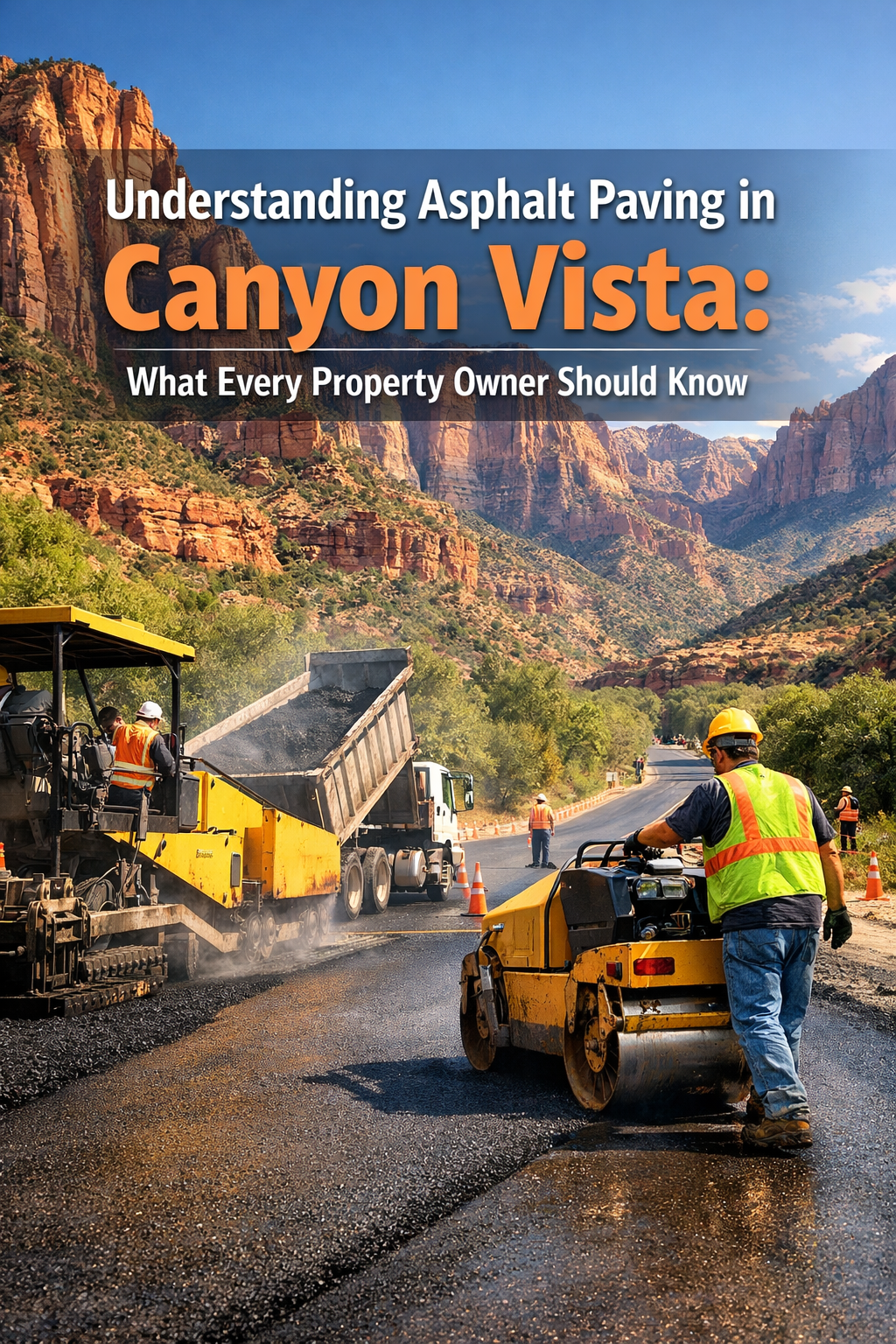
A professional asphalt project begins with a site evaluation. A contractor will assess the existing surface, the condition of the base, drainage patterns, and the intended load the pavement will carry. This informs decisions about the appropriate asphalt mix design and the number of layers required.
Site preparation is critical. Poor subgrade preparation is the number one cause of premature pavement failure. The area must be properly graded to ensure water flows away from the surface rather than pooling underneath. The aggregate base is then laid and compacted using heavy rollers. Hot-mix asphalt is applied, spread to an even thickness, and compacted while still warm for maximum density and durability.
After the asphalt cools and cures typically 24 to 48 hours before light vehicle use the surface is ready. Striping, curb installation, or other finishing touches can follow. Sealcoating is generally recommended 6 to 12 months after a new installation to maximize longevity.
Asphalt Maintenance: A Long-Term Investment in Your Property
A well-maintained asphalt surface can last 20 to 30 years with proper care. For Canyon Vista homeowners and commercial property managers, this means establishing a regular maintenance schedule that includes periodic inspections, prompt crack sealing, and sealcoating every three to five years.
Ignoring small pavement issues tends to lead to compounding damage. A minor crack becomes a pothole; a pothole becomes a structural failure that requires full-depth replacement. By contrast, routine maintenance preserves both the surface appearance and the structural integrity of the base extending service life and protecting property value.
Canyon Vista and Oceanside’s Growing Paving Needs
As Canyon Vista continues to grow as a residential community within Oceanside, demand for professional asphalt services from new driveway installations to HOA parking lot maintenance is part of the broader infrastructure story of the area. The community sits within a city that prides itself on quality of life, from its celebrated waterfront to its well-maintained inland neighborhoods. Keeping paved surfaces in good condition contributes to that quality of life in practical, everyday ways.
Whether it’s a private driveway, a shared community road, or a commercial parking lot, asphalt paving in Canyon Vista involves thoughtful planning, quality materials, and skilled workmanship. Understanding the basics empowers property owners to have informed conversations about their paving needs and to recognize the value of professional service.